Wednesday, 19 June 2013

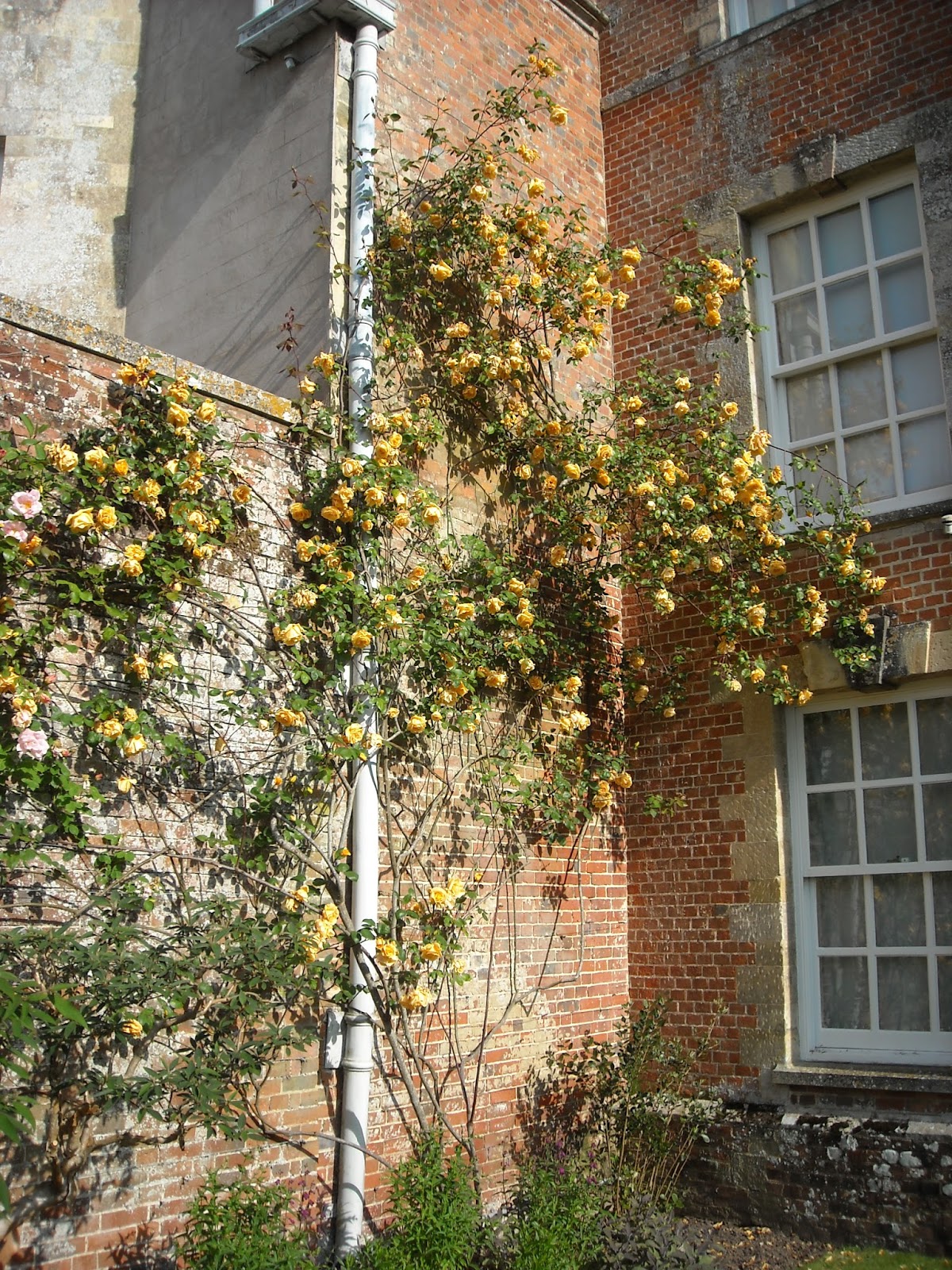
Beautiful Roses

"He who would have beautiful Roses in his garden must have beautiful Roses in his heart" Dean Hole.

A short and sweet entry this week as the garden is now getting really busy both with work to be done and visitors. I hope you enjoy the following pictures, I wish I could photograph everything in flower but there just isn't enough room. There is a wonderful display of Peonies, Geranium, Crambe, Hemerocallis, Dianthus and much more to accompany the Roses so I urge you to come and visit.


Mottisfont Abbey


 'Lady Hillingdon'


'Tom Marshall'


'Morletii'


Kat cleaning up 'Desprez a fleur jaune'


'Marguerite Hilling'

'Pax' and 'Vanity' growing together


'Souv. de la Malmaison' 

Monday, 10 June 2013

Kathleen Harrop

I would like to introduce you to Kathleen Harrop. The story of this wonderful rose begins with a Bourbon rose by the name of 'Zephirine Drouhin', a thornless Bourbon with vivd pink and sweetly scented blooms which was raised in 1868 in France by Bizot. It is most often grown as a climber and produces blooms continuously through summer into autumn.

Kathleen Harrop is a sport of Zephirine Drouhin and was introduced in 1919 by Dickson. She has wonderfully scented double blooms of soft pink which are much lighter than that of Zephirine Drouhin. The plant as a whole is less vigorous but much more attractive to my eye, and when in bloom will stop anybody in their tracks with its sheer beauty and a perfume that carries gently on the breeze. The flowers are also continuous into the autumn and I would highly recommend putting one in your garden if you have the space. Here at Mottisfont the best place to see Kathleen Harrop is in the Frameyard where she grows on a west facing wall directly to the left of the large white gates. It can also be grown as a large shrub if pruned well and given enough space.


Thursday, 30 May 2013

Man With Rake

Before I get to the main event I wanted to share a little anecdote. "I say - man with rake!"  This is was said by a visitor wishing to get the attention of a gardener in the rose garden, it was a few years ago now and the gardener in question was a colleague of mine who I am sure will be reading this. Many people may be offended if this comment was directed at them from across the garden, but not here, it has gone down in Mottisfont history as one of the funniest comments any of us has ever received. It still makes me smile thinking about it.

Moving on to the serious business of gardening, this past ten days has been really busy for us in the run up to the rose season. I can report that a majority of the wall roses now have at least one bloom fully open with the rest following closely behind. over the next couple of weeks we will see all the wall roses come into full bloom and don't worry you will receive lots of pictures as this happens! The shrub roses are following behind nicely and with plenty of buds over all the plants it is shaping up o be a stunning display.


Above is a picture of the beautiful Viburnum Plicatum 'Mariesii', this is situated in the first section of the Walled Garden known as the Frameyard. There are a few of these planted together to form a large clump and it's huge, in the picture is Matt and he gives a good idea of scale. This is a great plant which gives an amazing display of flowers every year without fail, I mean the whole shrub is literally covered in them. Not only does it flower well but the foliage also produces a beautiful dark 'burnt red' colour in autumn and looks equally as impressive.

Trimming the Irish Yews in the Central Garden has occupied Matt and Myself for a couple of days this week. You may be interested to know that this process is done completely by hand in the traditional way, we use shears and secateurs and take the time to carefully tend to each one. We even go so far as to use a spirit level on the tops to ensure that they are absolutely flat and level, I realise this may sound a bit extreme to some people but it's important to all of us here that they are pruned in this way. Keeping traditional skills alive is a necessary part of the job, it would take a fraction of the time if they were done with machines but in all honesty they wouldn't look half as good. And there really is a great amount of skill in being able to use shears and secateurs properly to produce an even, tightly clipped Yew.


And finally, here we have Victoria and her raised vegetable beds. The salad beds contain Carrot varieties 'Fly away' and 'Trevor', Radish 'Rudi',  Beetroot 'Boltardy', Onion 'Whit Lisbon', Lettuce 'Maureen', 'Rivale' and 'Tantan' and Rocket. Victoria is also producing an ornamental vegetable bed to contain Dwarf French Beans, Chard, Beetroot, Cabbage, Kohlrabi and Parsley. I will keep you updated on the progress of this.     

Monday, 20 May 2013

Boxing


Hello to one and all. Last week saw us undertaking one of the last big jobs (there is one more big job that you can read about in the coming weeks)  before we really get into the swing of the rose season, this is trimming the box (Buxus) hedges that border the paths in the Central Garden. This job takes 2 people about two and a half  / three days to complete and believe me your back will not thank you for it! For this job we use battery powered hedge cutters mainly as it reduces the noise levels massively and means that we can work all day without causing too much disruption to visitors or our ears. I realise that some of you will be very sceptical about the use of battery powered tools, and to be honest with you so was I before we purchased them. However I can say that they do a fantastic job and are just as good, if not better than the petrol machines we used before (you will need several thousand Pounds if you want to buy though). The battery is worn on your back like a rucksack and is  very comfortable, all the straps are nicely padded and you soon forget you are even wearing it. The hedge trimmer unit is extremely light, nothing else can compete with it in terms of weight and that too is a great benefit. The reason for the bad back is not because of the trimmers, it's because the hedges are only a couple of feet high so you are bent over all day.


The hedges themselves were considerably reduced in size a few years ago as they had become too tall and wide. As a result of this there were a lot of holes and bare patches but now they are starting to fill in really well, and in some parts its hard to even notice what happened. Due to the slow growing nature of Buxus its still going to take a couple more years before they are perfect, but with each passing year they look a little better.


One of the most common questions at this time of year is "when do you think the roses will be at their best?" So for all of you who are thinking the same thing I believe that we are on course for a traditional mid June display. The weather has been kind to us and we've enjoyed a more classic spring this year and thus I would expect the flowering season to reflect this. Of course if we have 4 feet of snow in the mean time then my prediction will be completely wrong, but let's hope not.

Monday, 13 May 2013

The First Rose in Bloom


Good morning from a slightly overcast Mottisfont. Here we have the 'Anemone Rose' and it's the first rose in bloom! Every year there is a bit of competition between this and 'Gloire de Dijon' as to which will bloom first. These roses grow along a large south facing wall and get a great deal of sunshine which is why they come out so much earlier than most of the others.


To accompany the first blooms on the roses we have a stunning display of Myosotis in the Frameyard, there are great swathes of powder blue mixing in with the roses and Tulips.

 Whilst on the subject of Tulips we have some beautiful varieties in the garden this year; First is a pink variety called 'Survivor', next is a pale pearl/white variety called 'Angels Wish' and below is 'Cairo'. I realise the picture at the bottom isn't the best quality but the 'Cairo' Tulip is a
 real winner in my opinion.


To continue on from my last instalment - below is a picture of some of the Lavender hedges that were trimmed a couple of weeks ago. You can see how much they have come on  in just a couple of weeks, its a really good comparison.

It's an exciting time to be out in the garden as everything is growing like mad (including the weeds) and I find myself being rewarded with the sight of plants that I had forgotten about over the long winter. What a great feeling! I hope you all have a good week and are able to get out and enjoy your own gardens.

Sunday, 5 May 2013

Life Begins

Firstly I must apologise for taking so long to give you all and update. We have been super busy over the past few weeks as the beautiful weather has meant that we can get on and complete many of the spring time tasks. This time of year is one of our busiest times as the garden is bursting into life and it seems that everyday there is something new to see, also we are now rapidly approaching the rose season so ensuring the garden looks at its absolute best is a priority.


Here we have Cat working hard to get the mulch down and spread across the herbaceous borders. Lots of people ask what we use as a mulch, the stuff pictured here is called 'Pro-Grow'; this is produced by the local council from all the green waste that is taken to the dump or collected from your house. After people find out what it is the instant response is  " I've heard that stuff is full of weeds and unwanted seeds". I can honestly say that here at Mottisfont we have never encountered such a problem(and we use at least 5 tons per year if not more!), perhaps we are lucky enough to have a council that uses the proper composting procedures. Whatever the reason, this stuff is really rich and packed full of nutrients and I highly recommend it as a mulch or as a soil conditioner. We also use well rotted horse manure especially around the roses and in particular the Hybrid Perpetual varieties. I collect the manure from the local stables as they are more than happy to get rid of as much as they can.


Another big job that happens at this time of year is trimming the Lavender hedges in the North Garden, the hedges get trimmed twice a year; they receive a good hard going over now and a lighter trim after they have finished flowering. As you can see we take off quite a bit of growth now, this is so they keep a tight and compact shape. Many people tell me that they think we have been too hard and I must admit that it looks quite drastic. As many of you know Lavender shouldn't be cut back to old wood because it wont sprout from there, this is very true but  the problem that arises from this is often people are scared to prune or trim them in a way that keeps them manageable. The secret is to be fairly hard and do cut into the woody sections of the plant but make sure there are foliage breaks below where you are cutting and the plant will be absolutely fine. hopefully these pictures will help illustrate the point.


The Rose Garden lawns have had their 'spring clean' and they look spectacular even if I do say so myself. The spring time maintenance on these lawns consists of scarifying to remove any thatch and promote good strong re-growth, followed swiftly with a good low cut, then they are fed with turf fertiliser. They also benefit from being aerated and ideally this would happen at least once a year, but I will admit that it doesn't always happen with such regularity here.


Finally the paths in the North Garden have been graded and are receiving a new top dressing of crushed slate which is one of the finishing touches. The eagle eyed among you will spot Murphy posing for a photo, he's our garden cat and a favourite with visitors.


Wednesday, 10 April 2013

Upon My Return

I have just returned to work after a week on holiday and I was greeted with a whole host of plants which have come into flower in my absence. It was a wonderful sight and has filled me with hope that we are at last leaving the winter behind us and moving forward into spring.

Here we have the Chionodoxa which produce this stunning carpet of blue under the 'Lime Walk' adjacent to the North Lawn. It's quite remarkable how much they have come on in the space of a week as before I went away there were just a couple in flower. I was also pleased to see the Muscari and Tulip 'Salut' bringinf some much welcome colour to the rose garden.


Drifting away from plants just for a moment, today we are holding interviews for our Seasonal Gardener possition and all the candidates look very promising. Having an extra pair of hands for 6 months is very welcome, especially as the amount of work starts to build up. I wish all the candidates the best of luck.

The update this week is short and sweet as I'm feeling a little under the weather but please continue to read and share this blog, also any comments or suggestions would be well recieved. I hope you all have a great week!


Wednesday, 27 March 2013

Still Waiting for Spring........

So we are now in the last week of March and I have to say that I had expected to see spring arrive already, alas that isn't the case for us here at Mottisfont. The weather here, like everywhere else in the country, has been bitterly cold and as a result of this the plants are reluctant to come out of winter hibernation. A good example of this is that about 90% of our daffodils are yet to come in to flower! I appreciate that many parts of our country are under a huge amount of snow and we have managed to escape it altogether, so I can't really complain. I feel for those people who have been affected by the snow especially the farmers who have had whole flocks of sheep covered in 6ft of snow and for those who have lost other livestock.

The cold and dry weather has enabled us to get on with some good work and this week we have been able to do a lot of feeding and cultivation of the beds. Here in the rose garden we use two fertilisers or 'feeds' for the beds; the first is an organic pellet feed from Vitax, this gets scattered over the whole bed and provides a great amount of nutrients for both roses and companion planting. The second feed that we use is called Roots, this is a fantastic feed! It's a 'biologically enhanced' feed and basically it will help to improve the eco system and bio-diversity within the soil as well as provide nutrients to the plants. The point behind this is that if you can maintain a healthy ecosystem within the soil, then this will be a much better environment for your plants to grow in and ultimately they will respond in a much more positive way. Roots also gets spread over the whole bed, I often try to give a little more around the base of a rose but it will be most beneficial if you can work it in to all the soil. A word of warning - Roots can be very expensive and doesn't need to be heavily applied, a light scattering will be sufficient.

Once the feed has been applied to a bed then the process of cultivating starts. Over the vast majority of the beds we use a 3 tine cultivator to work the feed in to the soil, this is a manual opperation and involves you pulling the cultivator toward you thus giving the effect of  miniature plough. but in some places the ground is forked over.


This week has also seen our Heritage Diploma student Victoria preparing some of the raised beds in the Frameyard for vegetables. This is going to be one of her projects this year so feel free to come and have a look at what's going on.


David Stone, the Head Gardener here at Mottisfont, has been busy preparing the 'cutting bed' this week. This bed is in the Frameyard and is used to grow a variety of beautiful cut flowers which are supplied to the house. A dedicated team of volunteers will come and use the flowers as they please in order to create the lovely flower displays.


Wednesday, 13 March 2013

Hello and Welcome

Hello and welcome to my brand new blog about the gardens here at Mottisfont,  I will endeavour to update this page at least once a week and keep you posted on developments in the garden. 

It feels like it's been a long and hard winter in the garden this year, probably because we didn't have much of a summer last year, but winter is nearly behind us and spring is just round the corner. I love this time of year as the garden is filled with so much promise of what is about to come, you start to see daffodils in flower everywhere and a whole variety of spring bulbs pushing up through the soil.

The big job that has occupied us over te past 8 weeks or so has been rose pruning, it's quite a task here with the numbers of roses running into the thousands. We are nearly at the end now and the team have done a fantastic job, especially when you consider that the work must go on despite the terrible weather if we are to finish in time.

On some of our roses we prune and train them in a method known as 'pegging down', this is done so that flowers will be produced along the whole stem. If these stems were to be pruned right down to form a more typical srub rose shape then all that flowering wood would be lost. This can be done with almost any variety of rose that prodeces long vertical canes of new growth, preferably over 4 feet in length and I encourage you to try it in your own garden.

Here are a couple of examples:


Please feel free to comment, post and share this bog as well as asking any questions that you might have. I would love to hear from you.